2026年4月20日,由基础医学院举办的清华大学生物医学前沿系列讲座(Frontier of Biomedical Seminar)2026年度第4期在医学科学楼D326顺利举行,澳大利亚墨尔本大学Scott Mueller教授本期带来精彩报告,题目为“Peripheral Sympathetic Neuroimmune Interactions in Viral Infection and Cancer”,由曾文文教授主持。
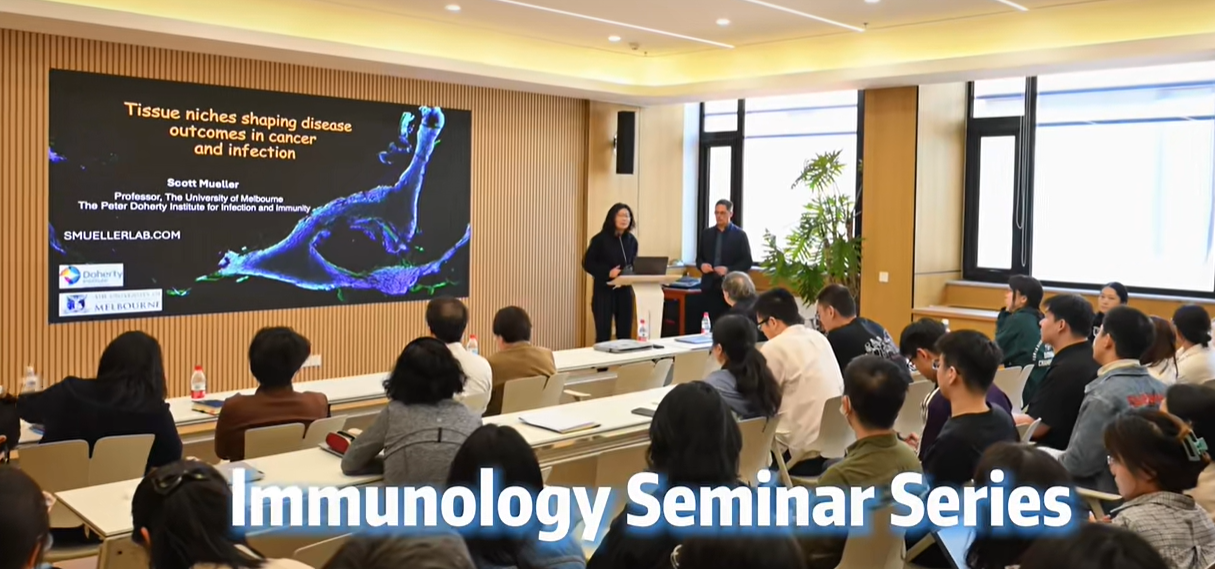
图1. 曾文文主持报告
曾文文教授首先对Scott Mueller教授的到访表示热烈欢迎,并简要介绍了其学术背景与研究方向。Scott Mueller教授现任澳大利亚国家健康与医学研究委员会(NHMRC)首席研究员、墨尔本大学彼得・多尔蒂感染与免疫研究所微生物学与免疫学系实验室主任。他长期深耕免疫应答基础细胞机制研究,致力于疫苗设计与免疫治疗新靶点发掘,在组织驻留记忆 T 细胞、活体成像、神经免疫调控等领域取得一系列开创性成果。
报告中,Scott Mueller教授系统阐述了神经系统在免疫应答调控及感染、肿瘤疾病进程中发挥的关键作用。他指出,越来越多证据表明,神经系统与免疫系统的双向对话深刻影响病原体感染与肿瘤发生发展的结局。Scott Mueller教授团队结合先进活体成像、转录组学及神经科学研究技术,深入探索外周神经系统、免疫细胞与基质细胞在器官及肿瘤微环境中的交互机制。
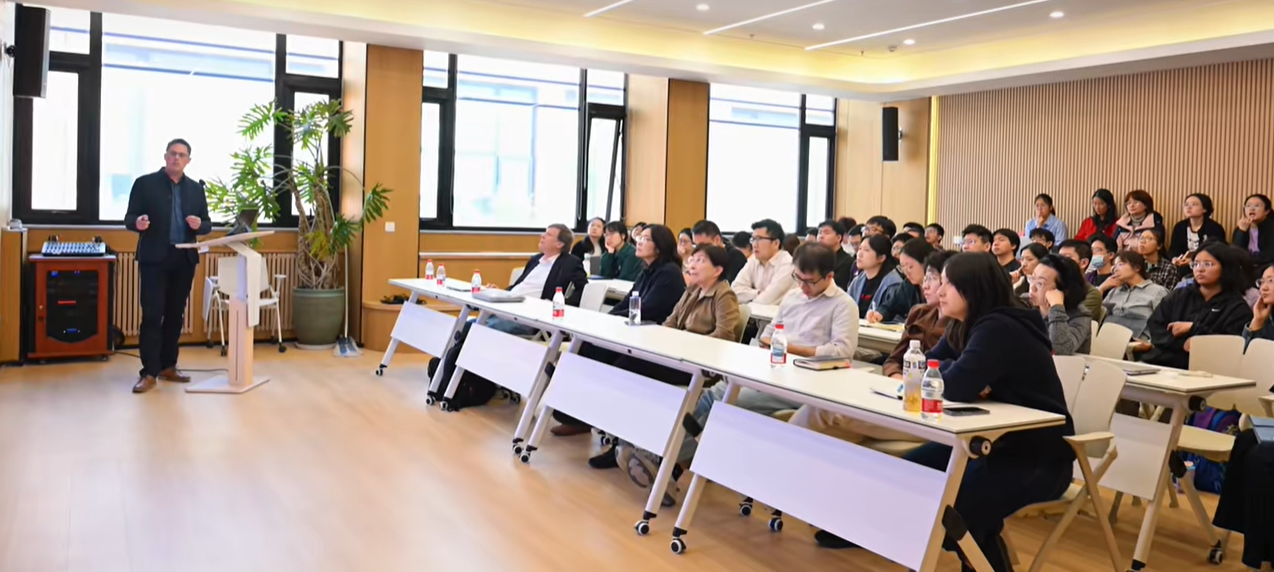
图2. Scott Mueller做报告
基础医学院师生踊跃参与此次报告。Scott Mueller教授的讲解深入浅出,帮助在座师生对神经免疫调控机制、活体成像技术应用、肿瘤免疫逃逸干预靶点等问题形成了更清晰、全面的认知。报告当日,他还与学院部分教师座谈、并与学生代表共进午餐,围绕研究思路、领域前沿等展开深入交流。
嘉宾简介
Professor Scott Mueller is an NHMRC Leadership Fellow and laboratory head
in the Department of Microbiology and Immunology, The University of Melbourne, at the Peter Doherty Institute for Infection and Immunity. Scott
completed his PhD at The University of Melbourne, performed postdoctoral
training in the USA at Emory University and then at the National Institutes of Health before starting his laboratory in 2010. His research is focused on dissecting the fundamental cellular processes involved in immune responses to identify new targets for vaccine design and therapeutics. Utilising animal models and intravital microscopy techniques he has pioneered methods to image skin and discovered subsets of tissue-resident memory T cells that provide rapid, front-line defence against infections. Scott is interrogating cell dynamics and cell-cell interactions in vivo from the perspective of the immune cells (lymphocytes, dendritic cells), stromal cells and neurons to achieve a detailed understanding of these processes from the cell to the tissue level during infections and cancer. Current research in the lab is focused on identifying sympathetic neuroimmune interactions that influence the outcomes of virus infection and cancer.