On August 1, 2025, the fourth session of the Frontier of Biomedical Seminar series at Tsinghua University was successfully held in Room B323 of the Medical Science Building.
This seminar, organized by the School of Basic Medical Sciences, featured Dr. Gao Ziyue from the University of Pennsylvania as the keynote speaker.
Dr. Gao delivered an academic talk titled “Impact of Flanking Base Sequences and Methylation on Mutation Spectra: From Eukaryotes to the Human Genome.”
Professor Lan Xun hosted the seminar from the School of Basic Medical Sciences.
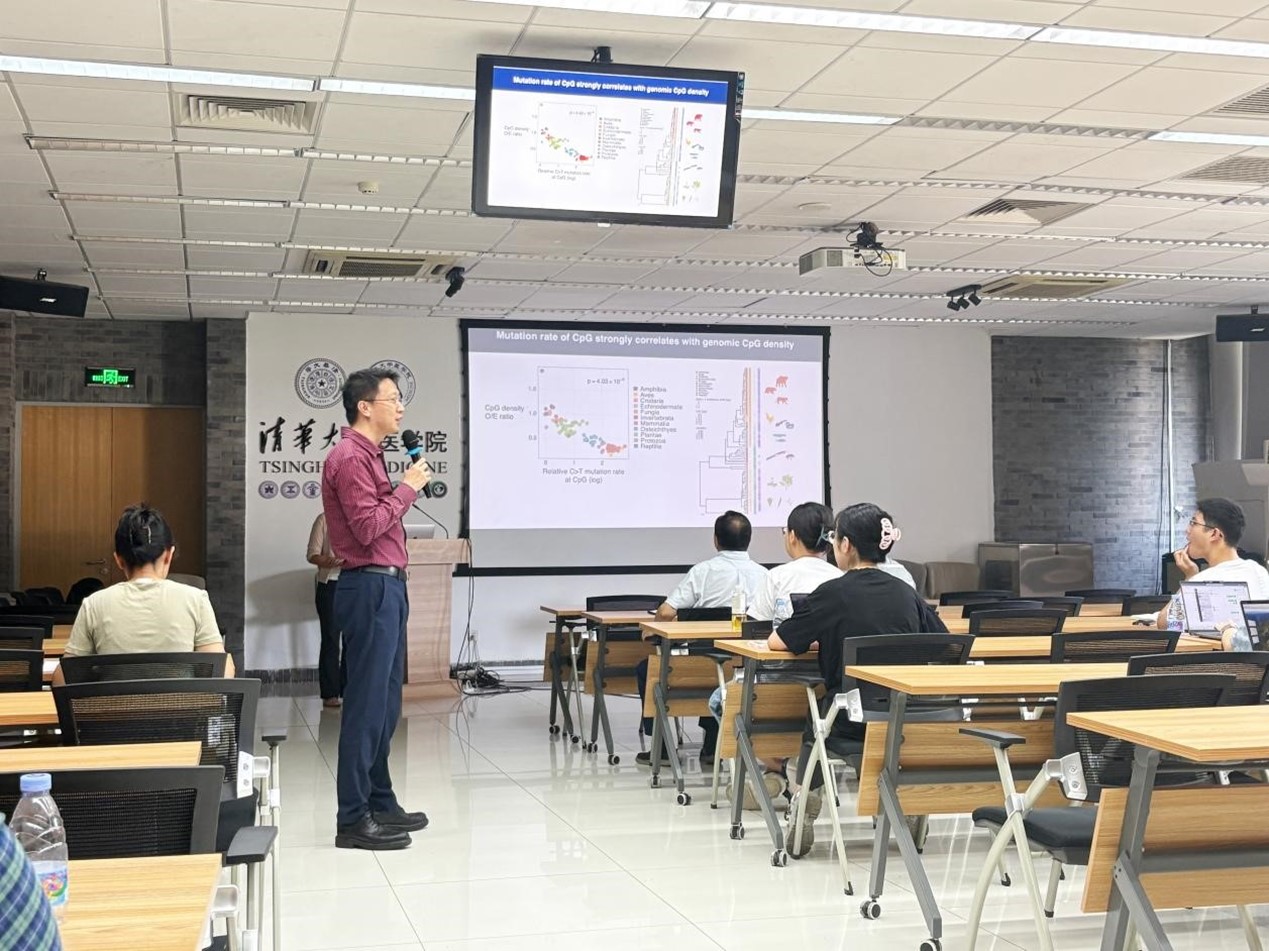
This talk will discuss the mutagenic effects of DNA methylation, along with the underlying mechanisms and long-term evolution. The first part focuses on CpG sites in the human genome-hotspots of mutation-and reveal how the flanking bases and cytosine methylation interact to influence germline mutation rates. In the second part, the study expands to a cross-species comparison of mutation spectra, leveraging genome-wide single nucleotide polymorphism (SNP)data from over 100 eukaryotic species. By modeling patterns of nucleotide substitution across species, this study reinforces the pivotal role of cytosine methylation at CpG and CHG sites in shaping variation in mutation spectra across eukaryotes. Overall, these results highlight the effects of DNA sequence context and methylation on the mutation spectrum and lay a foundation for investigating the underlying molecular mechanisms of methylated cytosine hypermutability and improving mutation models for inferring evolutionary constraints and detecting disease mutations.
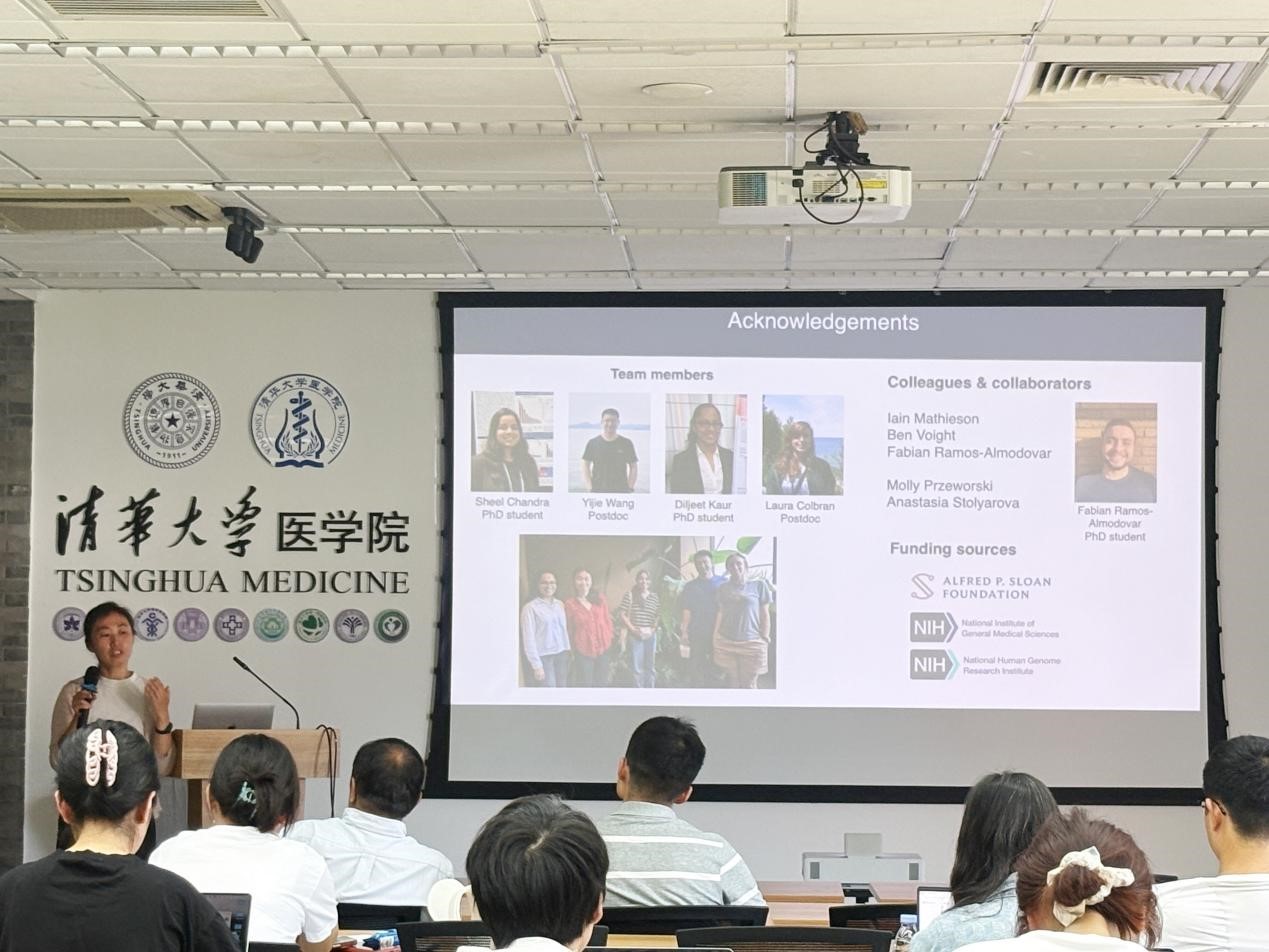
Gao Ziyue earned her bachelor's degree from Tsinghua University and pursued her Ph.D. at the University of Chicago under the guidance of Molly Przeworski, researching natural selection and mutation mechanisms in human populations. She conducted postdoctoral research in Jonathan Pritchard's laboratory at Stanford University, exploring the impact of natural selection on disease-causing genes and the transcriptome, and utilizing ancient DNA to study the population history of ancient Rome. Currently leading her own laboratory, she employs evolutionary and population genetics methods to investigate human genetics, evolution, and health-related issues. Her research focuses on random mutation accumulation, the effects of natural selection, and the genetic basis of complex traits, aiming to understand how mutations, population history, and natural selection collectively shape human genetic diversity and evolutionary processes.